

Neck pain can develop gradually from ordinary habits or appear suddenly after an injury. For residents of Batavia, NY, long periods at a desk, winter activities, household projects, driving, and sleeping awkwardly can all contribute. Most cases are related to muscle strain or joint irritation, but some symptoms require prompt medical attention.
What commonly causes neck pain?
The most common cause is muscle tension or strain. The neck supports the head throughout the day, so small stresses can accumulate when the muscles remain in one position for too long.
Common contributors include:
- Looking down at a phone, tablet, book, or work surface for extended periods
- Working at a computer with the screen too high, too low, or off to one side
- Holding the head forward while sitting
- Sleeping with the neck twisted or poorly supported
- Lifting, reaching, or carrying with poor body mechanics
- Repeating the same upper-body movement during work, exercise, or household tasks
- Stress-related muscle tightening around the neck and shoulders
Neck pain may also result from whiplash, a fall, a sports injury, arthritis, or irritation of a spinal disc or nerve. Nerve involvement can cause pain that travels into the shoulder, arm, or hand, along with tingling, numbness, or weakness. ([medlineplus.gov](https://medlineplus.gov/ency/article/003025.htm?utm_source=openai))
A common misconception is that neck pain always reflects a serious structural problem. Mild soreness after an unusual activity often improves with time and sensible self-care. However, persistent or worsening symptoms should not be dismissed simply as “bad posture.”
How does posture affect the neck?
Posture matters because the neck and upper-back muscles must work harder when the head stays forward for long periods. The goal is not to maintain a rigid, perfectly straight position. Instead, vary positions regularly and keep the head generally balanced over the shoulders.
For a desk or home workstation:
- Keep the top portion of the monitor near eye level.
- Position the screen directly in front of the body.
- Let the shoulders rest rather than lifting them toward the ears.
- Keep elbows supported when possible.
- Place both feet comfortably on the floor.
- Change position every 20 to 30 minutes.
A short movement break may include standing, walking, gently turning the head from side to side, or rolling the shoulders. These movements should be comfortable and controlled. Forceful stretching or sudden neck rotations can make an irritated area worse.
During colder months, people may spend more time indoors at computers, on couches, or doing extended home projects. Winter clothing, including heavy coats and scarves, can also encourage shoulder elevation and stiffness if worn for long periods. These factors do not directly cause every neck problem, but they can add to existing muscle tension.
Can phones and screens cause neck pain?
Screens do not damage the neck simply because they are used. The greater concern is prolonged, unchanging posture. Looking down for several minutes is usually not harmful; remaining in that position repeatedly for hours can increase fatigue and soreness.
Helpful adjustments include:
- Raise the phone closer to eye level instead of bending the neck sharply.
- Use voice-to-text or a stand for longer reading or viewing.
- Alternate hands and positions.
- Avoid using a phone between the shoulder and ear.
- Set reminders to look up, move, and relax the shoulders.
Children, teenagers, and adults may all experience this type of strain. The warning sign is often a pattern: discomfort that appears after screen use and improves after movement or rest.
What role do sleep and pillows play?
An awkward sleeping position can strain muscles overnight and cause morning stiffness. Sleeping on the stomach often requires the head to remain turned to one side for hours, which may aggravate symptoms in some people.
A supportive sleep setup should allow the head and neck to remain reasonably aligned with the rest of the spine. A pillow that is too high can push the head forward, while one that is too low may allow it to tilt downward. Comfort and alignment matter more than a particular pillow material or brand.
If pain regularly wakes a person at night, becomes worse when lying down, or continues despite reasonable adjustments, medical evaluation is appropriate. ([medlineplus.gov](https://medlineplus.gov/ency/article/003025.htm?utm_source=openai))
How can strength and movement help prevent recurrence?
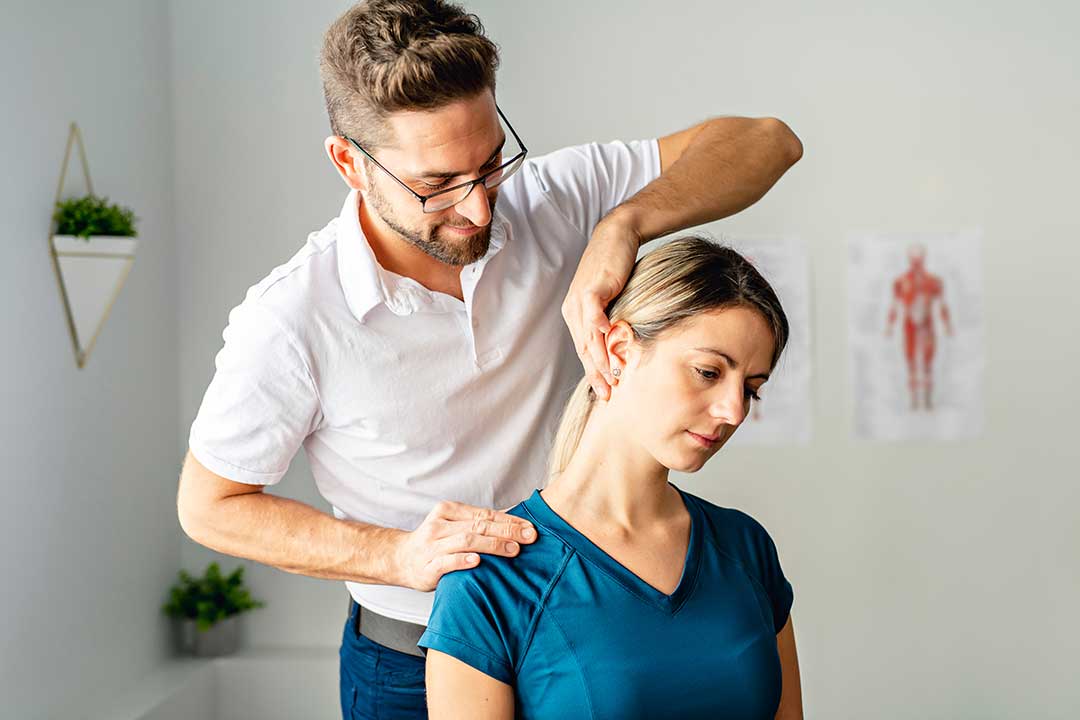
Regular movement helps reduce the effects of prolonged sitting and inactivity. General physical activity supports overall muscle function, while exercises that strengthen the upper back, shoulders, and trunk may help the neck work more efficiently.
A practical routine can include:
- Walking at a comfortable pace
- Gentle shoulder-blade squeezes
- Light resistance exercises for the upper back
- Controlled chin-tuck movements without forcing the head downward
- Mobility exercises for the shoulders and upper back
Exercises should be increased gradually. Pain that is sharp, radiates into the arm, or produces numbness or weakness is a reason to stop and seek guidance rather than push through.
Federal activity guidance recommends that adults work toward at least 150 minutes of moderate physical activity each week and perform muscle-strengthening activity on at least two days, adjusted for individual abilities and health conditions. ([cdc.gov](https://www.cdc.gov/physical-activity-basics/guidelines/adults.html?CDC_AAref_Val=https%3A%2F%2Fwww.cdc.gov%2Fphysicalactivity%2Fbasics%2Fadults%2F&utm_source=openai))
What should people know about lifting and seasonal activities?
Neck strain can occur when lifting is rushed or when the upper body twists while carrying a load. This can happen during moving, gardening, cleaning, recreational activities, or clearing snow and ice.
Safer habits include:
- Estimate the load before lifting.
- Keep objects close to the body.
- Bend through the hips and knees rather than rounding the upper back.
- Turn with the feet instead of twisting the neck and torso.
- Take breaks during repetitive work.
- Divide heavy loads into smaller portions when possible.
Cold weather may also make muscles feel stiff before activity begins. A few minutes of easy walking and shoulder movement can prepare the body better than starting immediately with strenuous work.
When is neck pain a medical concern?
Neck pain needs urgent attention after a significant fall, collision, or blow, especially if there is weakness, loss of feeling, or difficulty moving an arm or hand. Emergency symptoms can also include trouble breathing, severe chest symptoms, loss of bladder or bowel control, difficulty walking, or rapidly worsening neurological symptoms.
A stiff neck accompanied by fever and severe headache requires immediate evaluation. Persistent numbness, tingling, weakness, swallowing difficulty, unexplained swelling, severe pain, or symptoms that do not improve with self-care should also be assessed. ([medlineplus.gov](https://medlineplus.gov/ency/article/003025.htm?utm_source=openai))
For uncomplicated soreness, gentle movement is generally preferable to remaining completely still for long periods. Heat or cold may provide temporary comfort, but neither should be applied while sleeping. Medication decisions should account for allergies, pregnancy, kidney disease, ulcers, blood thinners, and other health conditions.
The most useful prevention strategy is usually consistent rather than dramatic: vary positions, build general strength, improve sleep support, lift carefully, and respond early when stiffness begins. Understanding the difference between ordinary muscle strain and warning signs helps local residents make safer decisions about neck pain.
